Venus de Milo
An ancient Greek statue of Aphrodite discovered on the island of Milos, the Venus de Milo embodies the classical ideal of beauty and grace.

An ancient Greek statue of Aphrodite discovered on the island of Milos, the Venus de Milo embodies the classical ideal of beauty and grace.
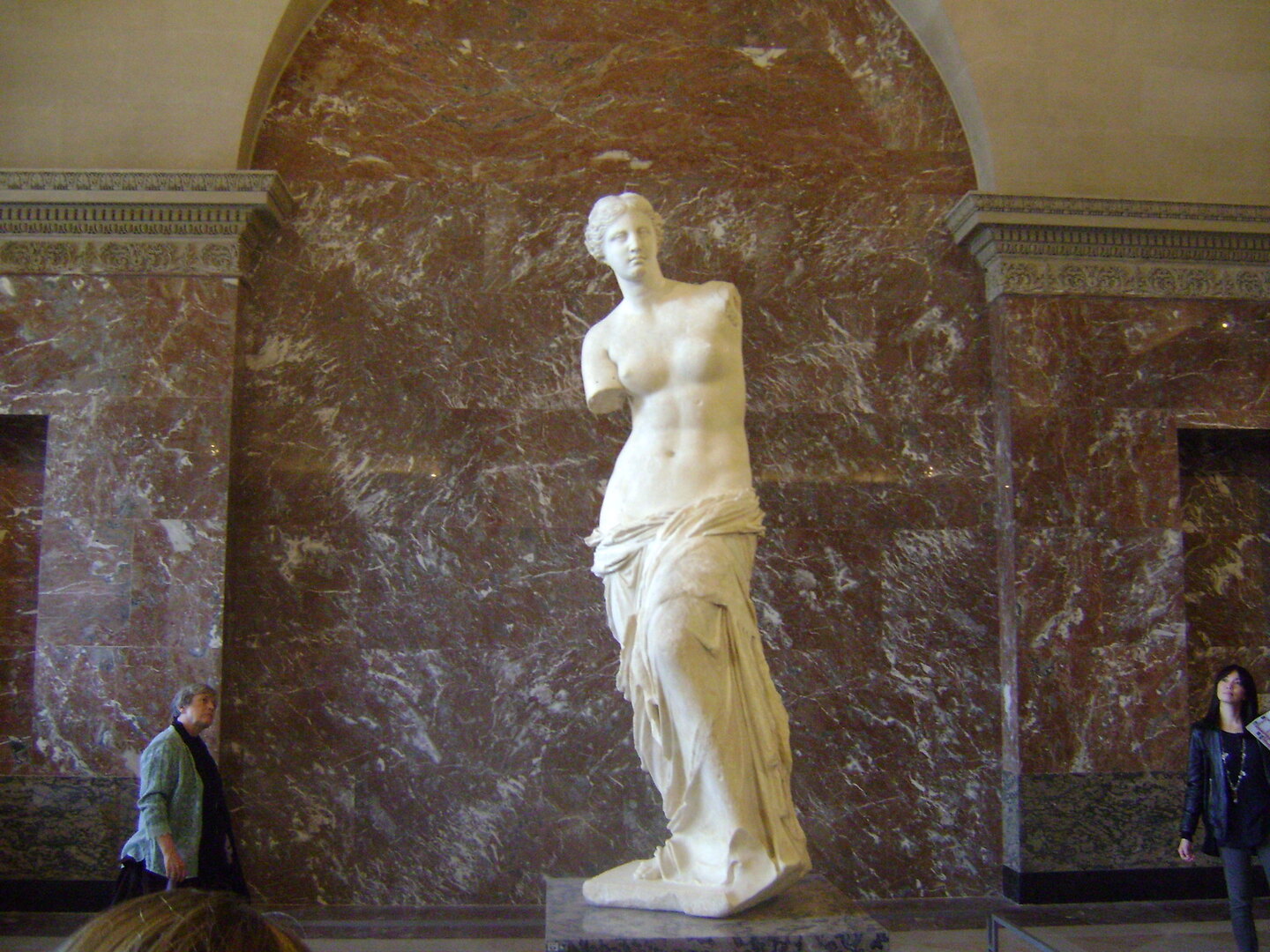
The Venus de Milo is one of the Louvre’s most beloved sculptures. Carved from Parian marble in the Hellenistic period, it is widely believed to represent Aphrodite, the Greek goddess of love and beauty, captured in a poised, twisting stance that suggests movement and grace.
Discovered on the island of Milos in 1820 and quickly acquired by France, the statue became a centerpiece of the Louvre’s Greek Antiquities collection. Even without her arms, the Venus de Milo continues to fascinate visitors with her serene expression and perfectly balanced proportions.
Book Louvre visit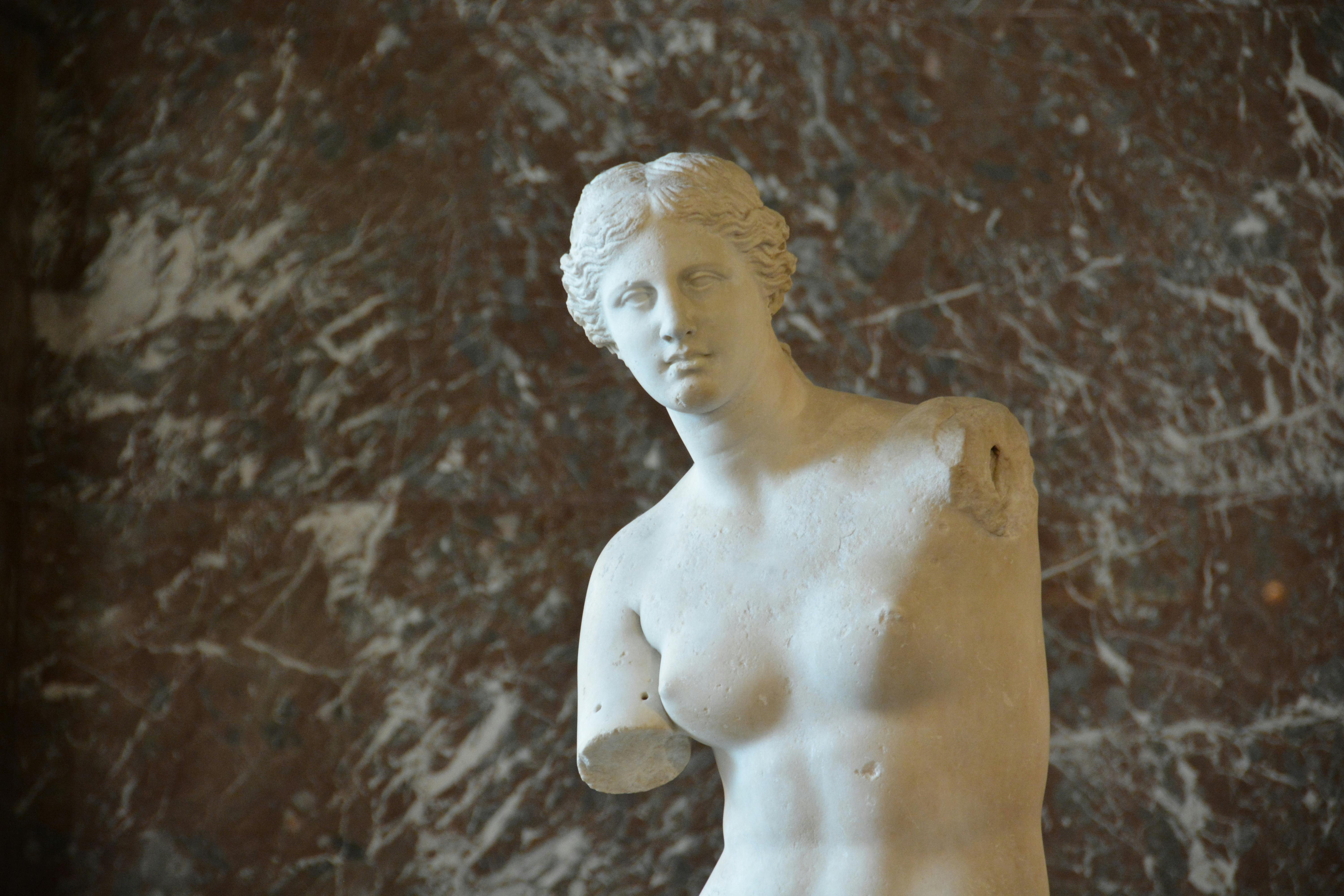
The statue combines idealized classical proportions with a dynamic twist of the torso, a hallmark of late Hellenistic sculpture.
The original arms have been lost, and scholars still debate how the goddess was posed - holding an apple, drapery, or mirror - adding to the statue’s enduring intrigue.
Found by a farmer on the Aegean island of Milos, the work quickly traveled to Paris, where it was presented to King Louis XVIII and soon installed in the Louvre.
Alongside the Mona Lisa and Winged Victory, the Venus de Milo forms part of the “big three” highlights that many visitors aim to see during a single Louvre visit.



Professional guide showcasing Mona Lisa, Venus de Milo, and Coronation of Napoleon with reserved access and headsets included.

Fast-track entry with reserved time slot to explore 35,000 artworks including Mona Lisa and Venus de Milo at your own pace.

Discover the Louvre in a magical atmosphere with fewer crowds on Wednesday and Friday evenings when the museum stays open late.
Carved from fine Parian marble and standing over two meters tall, the statue’s smooth surfaces and flowing drapery showcase the technical mastery of its unknown sculptor.
The Venus de Milo is displayed in a vaulted gallery in the Sully Wing, surrounded by other masterpieces of Greek sculpture - look for the crowds gathering around her central pedestal.
Step back to view the statue slightly from the left side: the twist of the body and fall of the drapery are especially striking from this perspective.
A well‑planned route lets you see Venus de Milo together with Winged Victory of Samothrace and the Mona Lisa in a single visit - Louvre tickets from GetYourGuide often include suggested itineraries.